
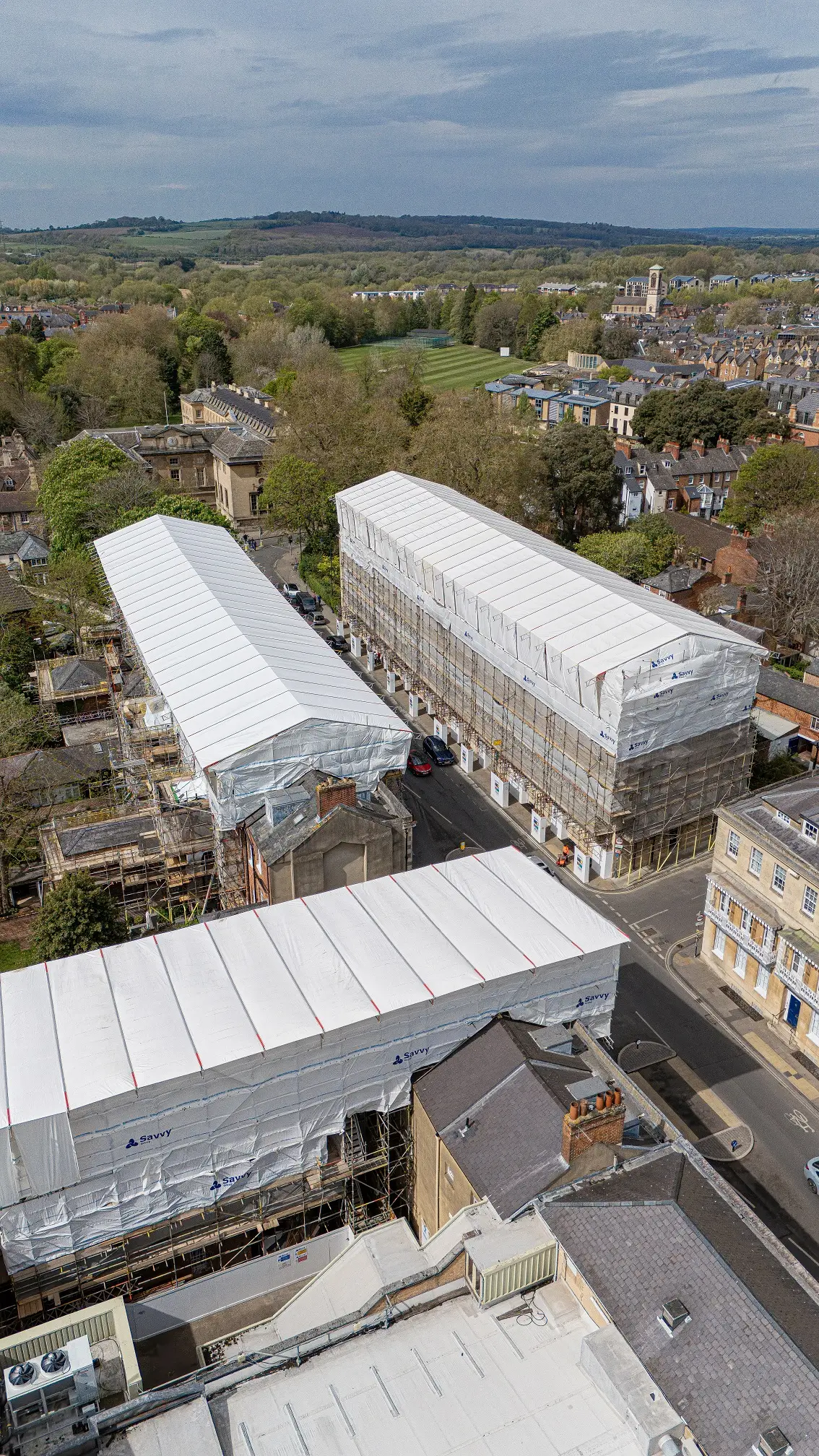
In partnership with Savvy Construction, a multi-building façade restoration project was undertaken in a densely populated urban district. The initiative involved scaffolded access to heritage-listed structures, live containment sheeting, and public-facing safety protocols. All works were delivered while maintaining residential access and institutional operations
Objectives
- Deliver compliant scaffold access across multiple elevations with minimal disruption.
- Preserve architectural features and historical façades during restoration.
- Maintain public safety and stakeholder confidence through visible containment and communication.
Scope of Work
- Scaffold Deployment:
TG20:21-compliant scaffolding was erected across five interconnected buildings, each requiring bespoke design due to elevation variance and structural sensitivity. - Containment Strategy:
Weatherproof sheeting branded with “Savvy” provided visual containment and dust control, while reinforcing project identity and public reassurance. - Live Site Management:
Pedestrian access routes, emergency egress, and service continuity were maintained throughout, with daily RAMS updates and site briefings.
Public Interaction Strategy
- Community Liaison:
Weekly updates were issued to residents and local institutions, including visual progress boards and QR-linked digital bulletins. - Brand Visibility:
The “Savvy”-branded sheeting served a dual purpose—containment and corporate visibility—reinforcing trust and transparency. - Educational Outreach:
Local schools were invited to site tours and scaffold safety workshops, fostering awareness of construction careers and compliance culture.
Strategic Impact
- Urban Regeneration Catalyst:
The project contributed to wider regeneration efforts, enhancing property value and civic pride in a historically significant district. - Stakeholder Assurance:
Transparent operations and proactive communication strengthened relationships with local councils, heritage bodies, and residents. - Operational Excellence:
The project demonstrated scalable compliance, multi-site coordination, and live-environment delivery—key benchmarks for future urban contracts.