
Objectives
- Restore glazing and structural elements without disrupting public access.
- Protect and preserve rare artifacts, including fossilized skeletons, ancient manuscripts, and ceremonial relics.
- Enhance public engagement through transparent restoration processes and educational programming.
Scope of Work
- Scaffolding Installation:
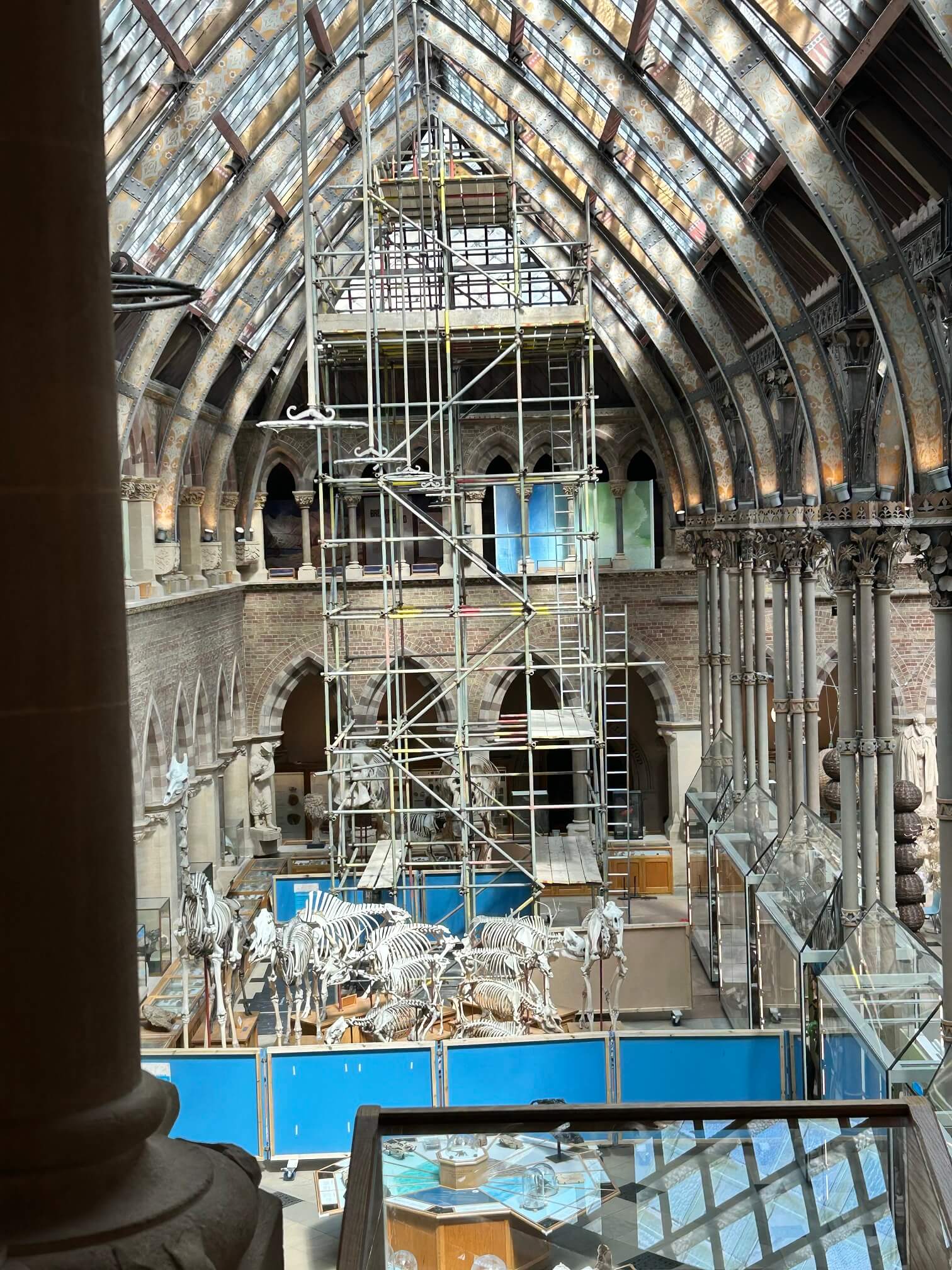
A bespoke TG20:21-compliant scaffold system was erected to access the ceiling’s ornate arches and decorative plasterwork. The design required Cat 3 engineering due to load-bearing constraints and artifact proximity. - Artifact Protection:
Climate-controlled enclosures and vibration monitoring systems were installed around key exhibits, including the museum’s centrepiece—an intact woolly mammoth skeleton. - Live Restoration Zone:
A viewing platform and interactive screens allowed visitors to observe conservators at work, with real-time commentary and weekly scheduled Q&A sessions.
Public Interaction Strategy
- Educational Panels:
Blue information boards explained restoration techniques, scaffold engineering, and the historical significance of the ceiling’s artwork. - Workshops and Talks:
Hosted by conservation experts and scaffold engineers, these sessions demystified the technical and cultural aspects of the project. - Digital Engagement:
A microsite featured time-lapse footage, behind-the-scenes interviews, and a virtual tour of the scaffold structure.
Challenges and Solutions
- Artifact sensitivity to dust and vibration
- Maintaining visitor access and safety
- Coordinating multi-disciplinary teams
Outcomes
- Zero Artifact Incidents:
No damage or environmental breaches were recorded throughout the project. - Visitor Satisfaction:
Attendance increased by 18% during the restoration period, with high engagement in interactive zones. - Legacy Impact:
The museum’s approach became a benchmark for live restoration in heritage settings, cited in industry publications and adopted by peer institutions.
Strategic Reflections
The project exemplified the intersection of operational excellence, cultural sensitivity, and public engagement. It required meticulous planning, collaborative leadership, and real-time problem-solving—qualities essential for high-stakes environments where heritage and public trust converge.